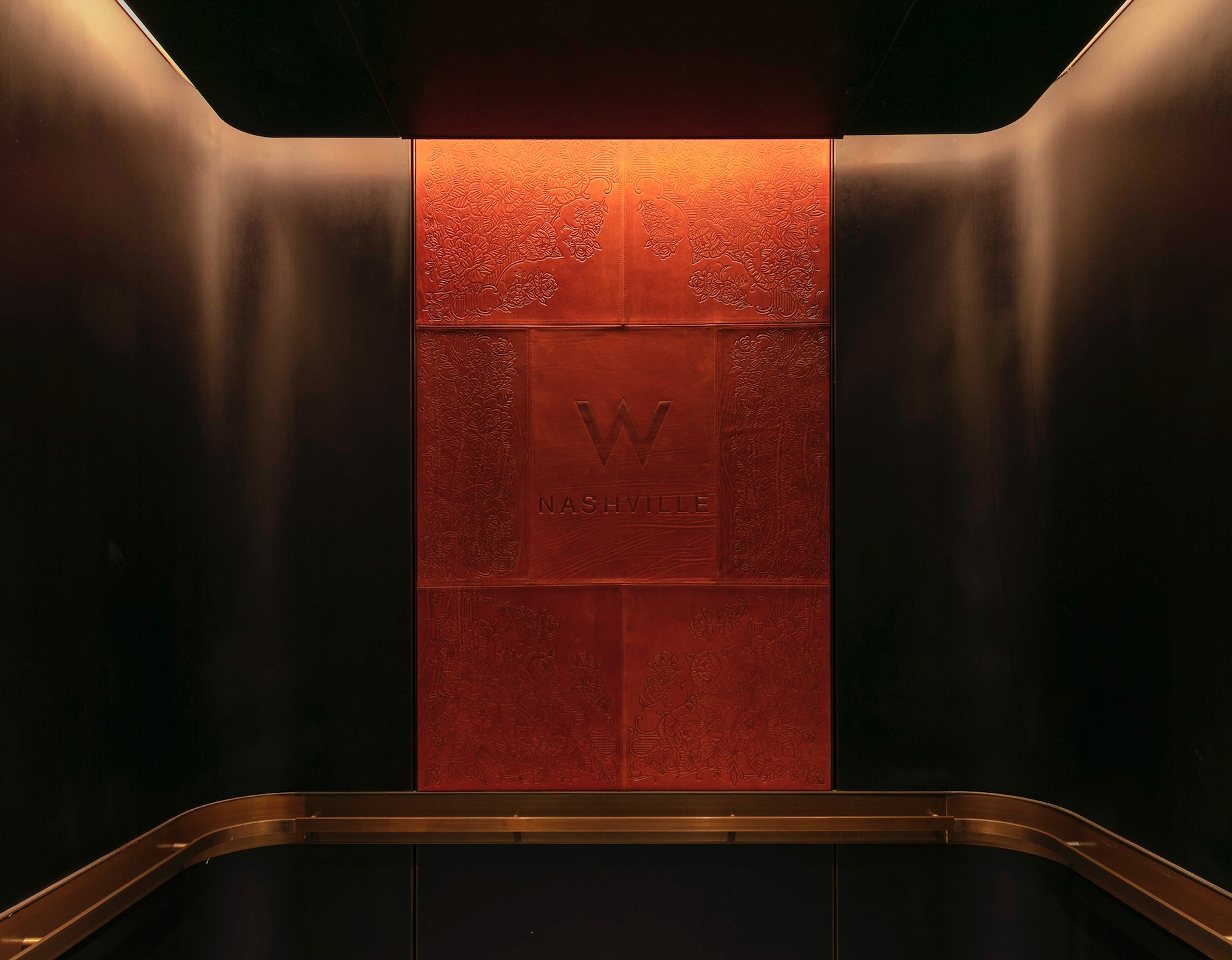
The Artist Series: The Leather Piece That Keeps Changing at W Nashville
Before his work ever lined the elevator walls at W Nashville, Joseph Verzilli was quietly building a life around leather. He came to Nashville through its music scene, set up his Lockeland Leather studio in the city, and even took his craft to Japan, refining his eye in workshops where every mark on a hide was intentional.
For HGA, design is never decorative for its own sake. When the team steps into a new project, they don’t start by asking what looks good. They start with a different question: which materials truly represent this city, and which of those deserve a place in the project? In Nashville, that list quickly included leather, denim, wood, cement, iron, and neon—the same elements that show up in its venues, streets, and stages. Once those anchors are clear, the next step is simple: find the people already doing remarkable work with them.
Leather, in Nashville, is everywhere. It’s wrapped around guitars, stitched into boots and belts, worn into barstools and banquettes. Choosing leather for W Nashville’s elevator wasn’t a styling trick; it was a way to bring a material that already lives in the city’s culture onto one of the most‑touched surfaces in the hotel.
There is a particular quality to well‑sourced leather that makes it different from almost any other material in hospitality design: it doesn’t stay static. It responds to light, to touch, to time. It darkens where people lean. It changes where hands pass. It develops patina, not just wear. That idea sits at the heart of the elevator installation Joey created for W Nashville: a finished, meticulously crafted piece that was never meant to sit behind a rope. It was always meant to be touched.
This is where the story starts.
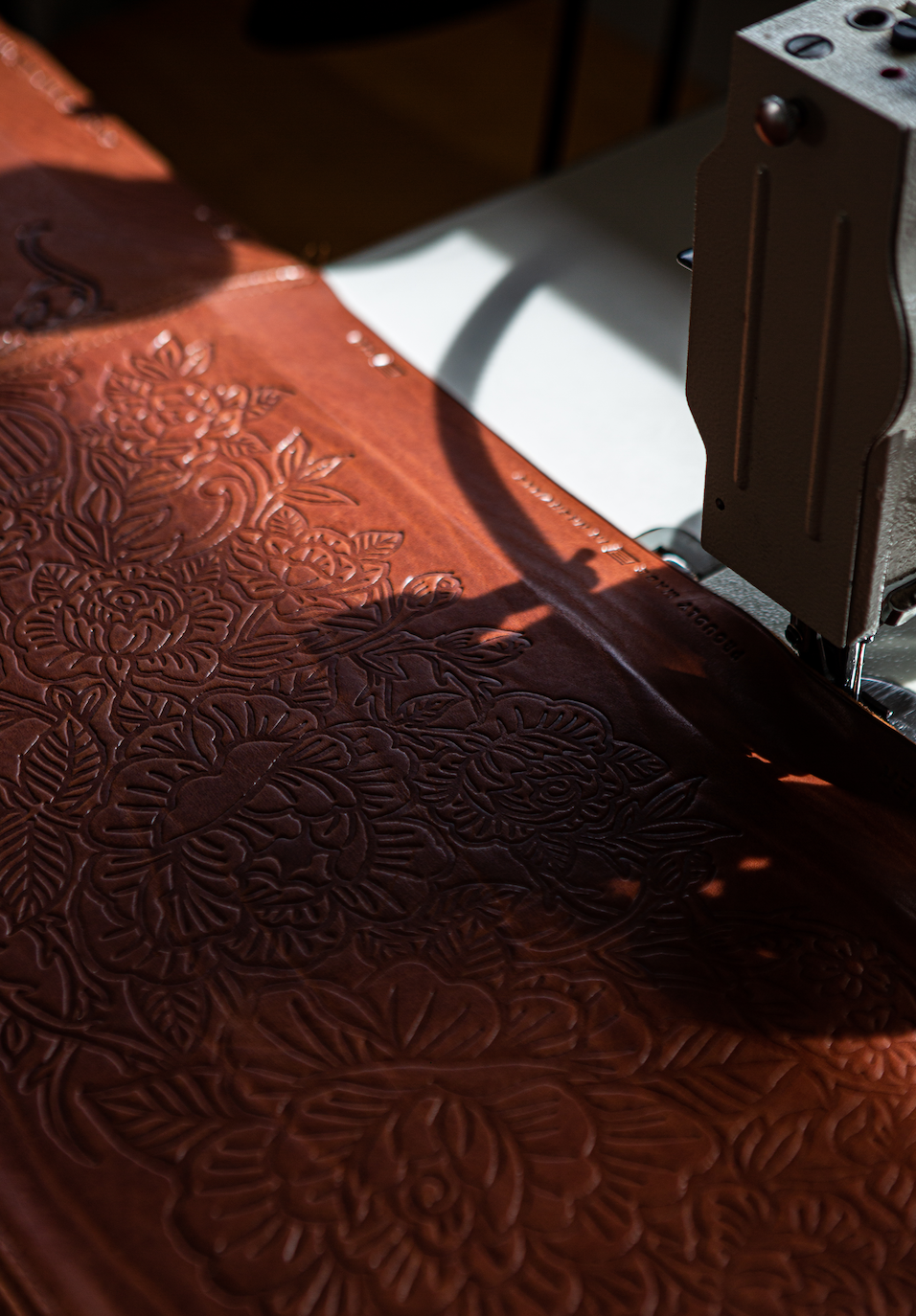
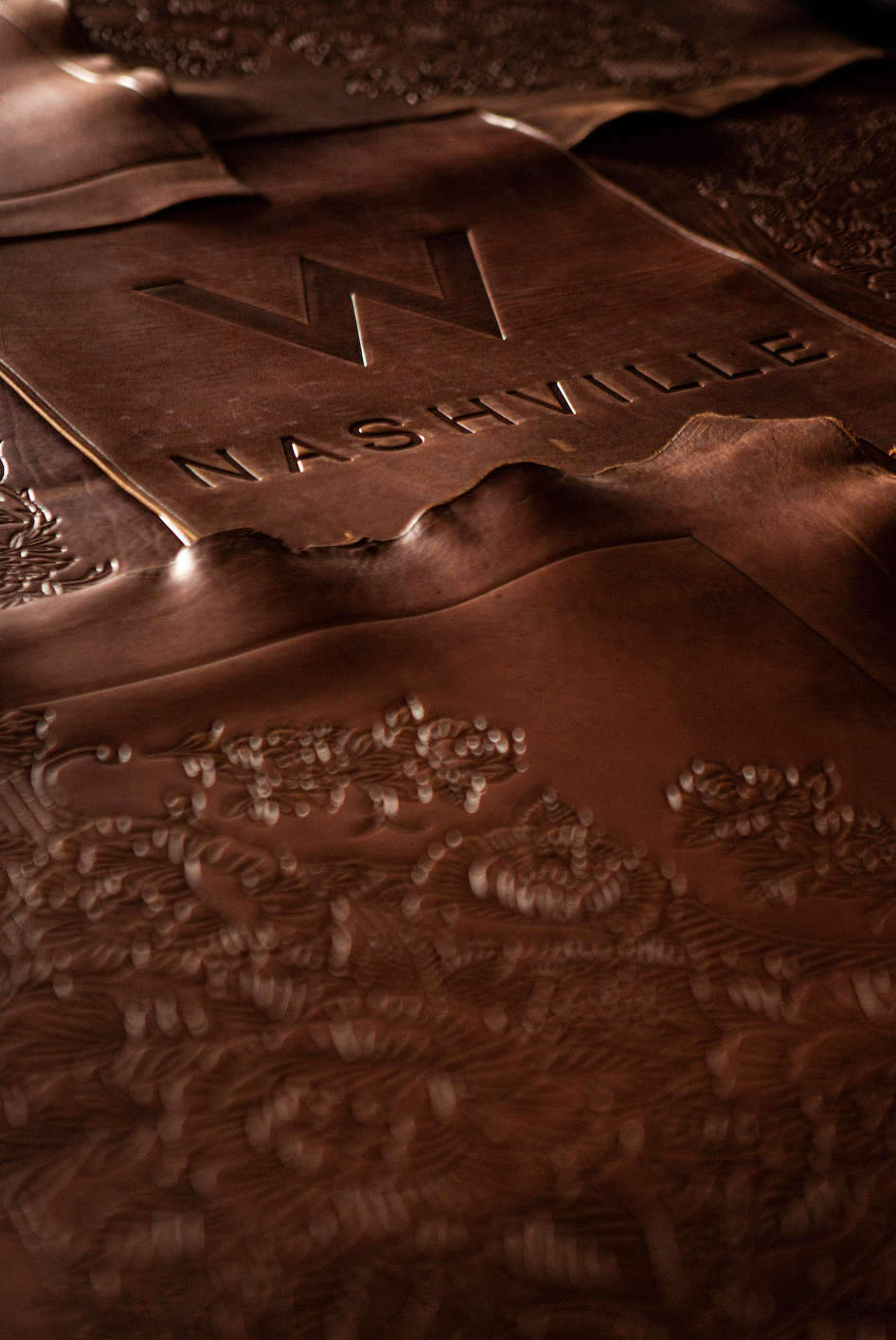
Before it lives on the wall, it lives under the press.
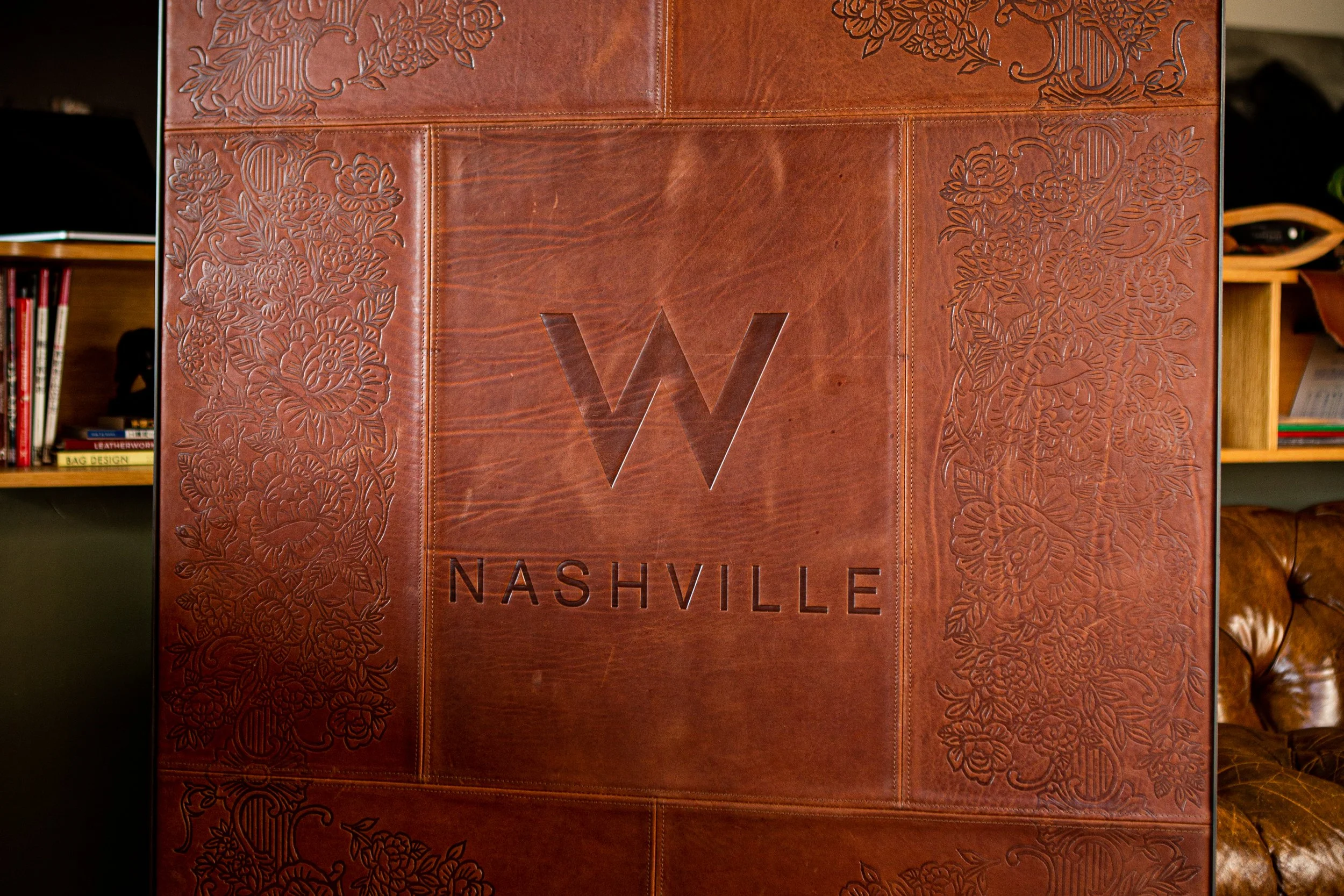
The work draws from the tradition of floral leatherwork and Western tooling, an honest nod to Nashville’s country heritage, reinterpreted for a design‑forward hotel. To build the visual language, Joey collaborated with Nashville‑based designer and illustrator Derek Castle, whose digital illustrations reimagined classic floral motifs in a way that felt sharp and current rather than nostalgic. The goal, as Joey describes it, was for everything to fit together like a puzzle—each panel connected, each pattern part of something larger.
Translating those illustrations into leather required a precise, multi‑step process. Custom stamps were created to press Derek’s artwork into Italian leather panels. Back in Nashville, Joey cut each panel by hand into its final pattern pieces and assembled the composition so the wall reads as one continuous story, not a series of repeats. The scale mattered: each hide had to be large enough to carry the pattern cleanly, and when Joey presented the finished panels, it came with the kind of pride you only see when someone has pushed their craft to the edge of what a material can do.
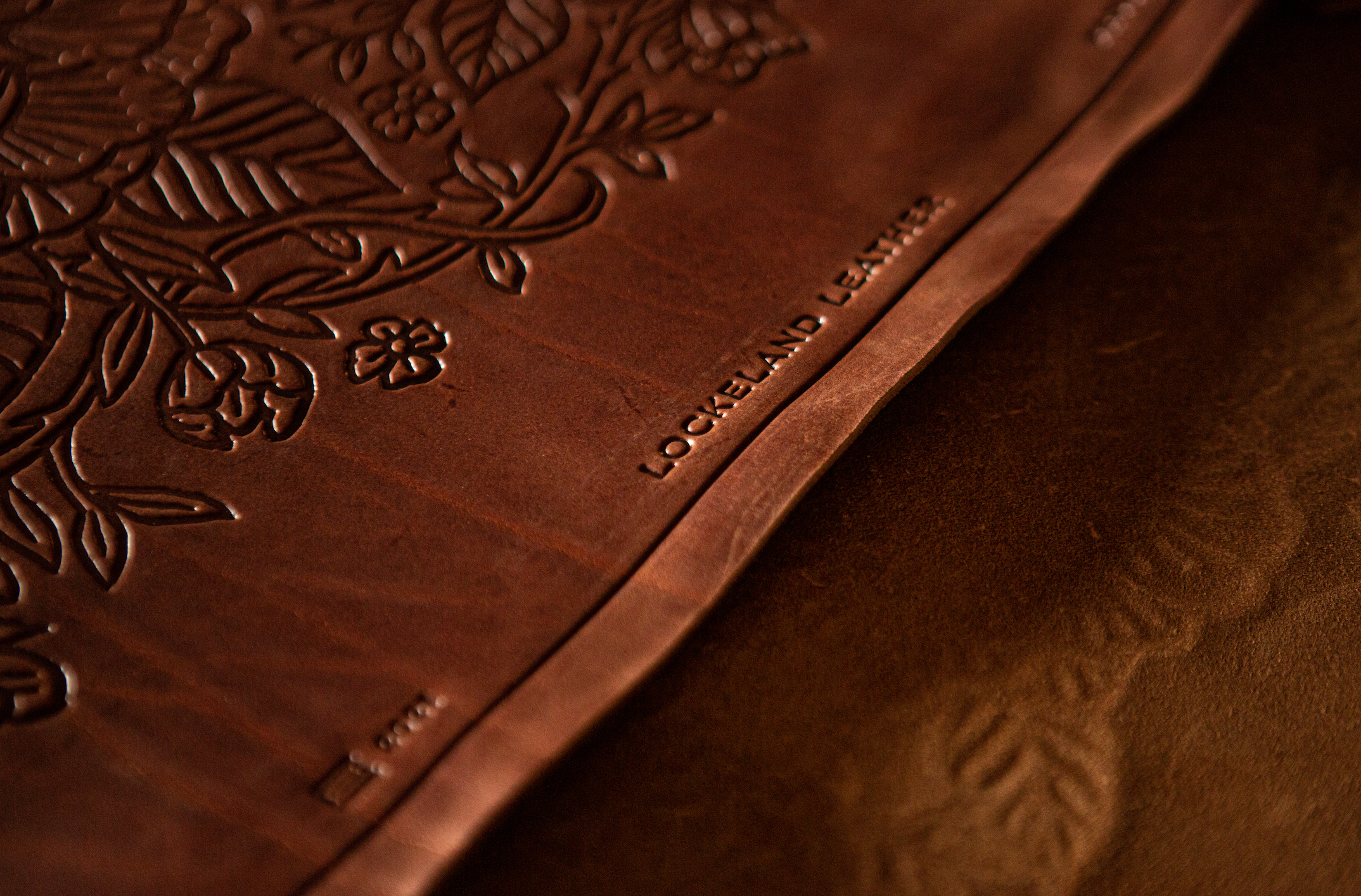
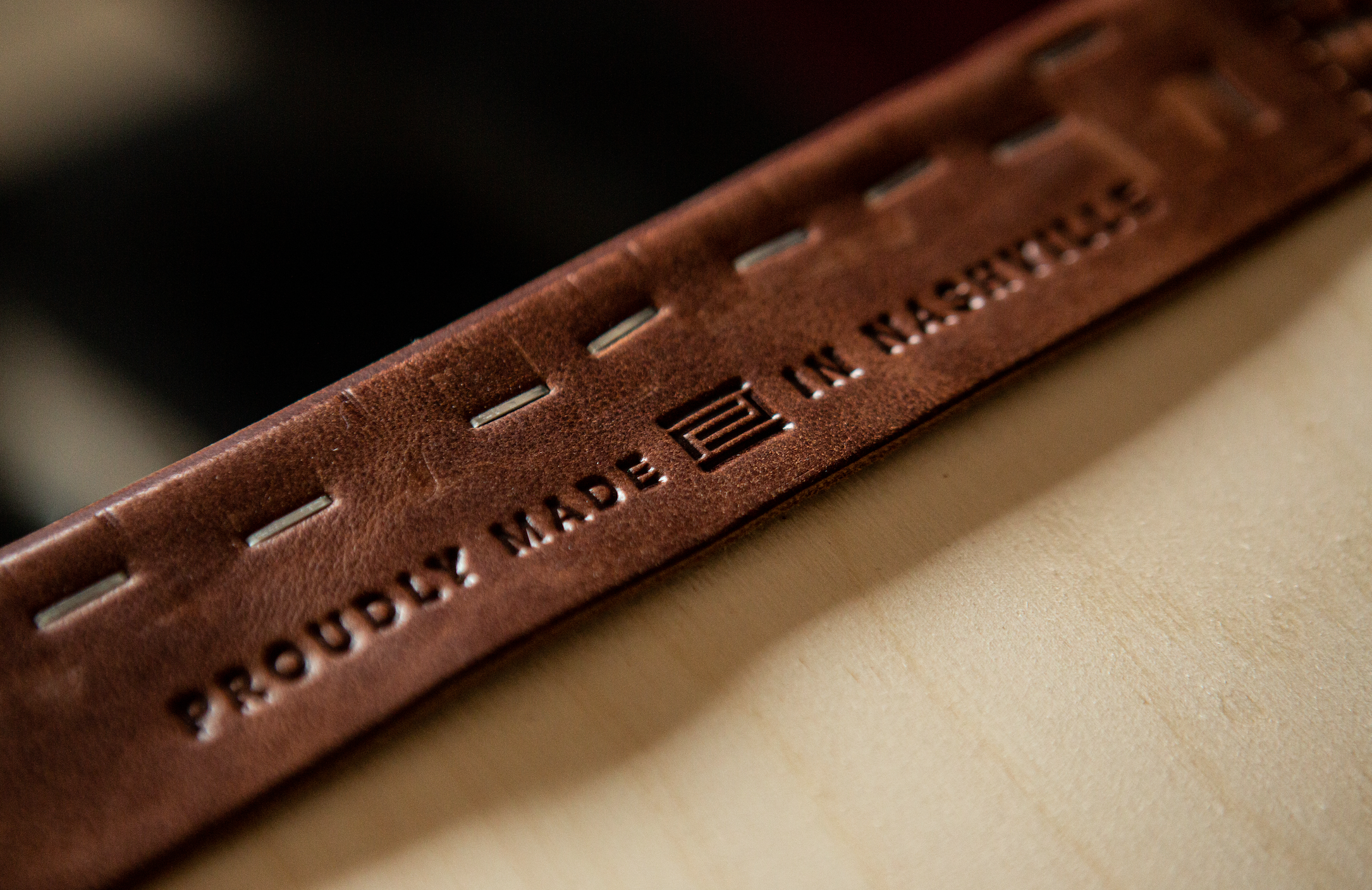
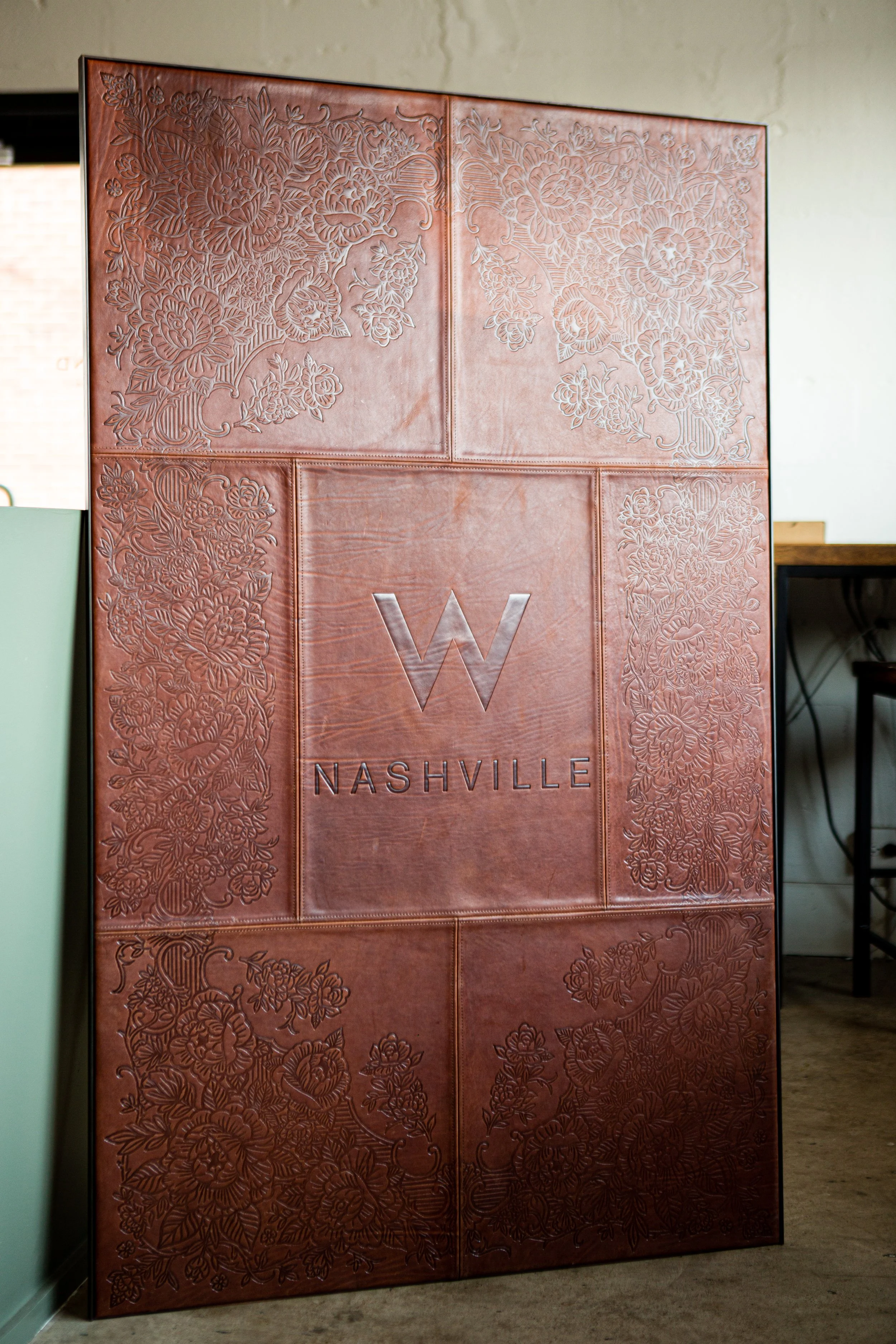
From a developer’s vantage point, this is not the obvious path. There were easier options: machine‑cut, “leather‑look” solutions from a brochure, finishes that behave predictably and look identical from day one to year five. Instead, the decision here was to commission a local artisan, work with real hides, and place the installation in a space where hundreds of people would interact with it every day.
Naturally, questions came up. What about fingerprints? The oil from guests’ hands? What happens when the wall starts to show it’s been used? For most projects, those are cautions. For Joey and HGA, they were part of the brief.
“They chose leather because it’s a living, breathing thing,” Joey says. He doesn’t want the elevator to remain untouched. He wants it to record life. Every guest who presses the elevator button, every hand that brushes the wall on the way out, leaves the faintest trace. Over time, the panels will hold a quiet record of everyone who has moved through the hotel.
A great leather piece doesn’t just hold up. It evolves. It gets lived in. It continues to tell the story of every person who has touched it. That’s exactly the kind of decision HGA looks for on a project: not the safest route, but the one that lets guests fully immerse themselves in what makes Nashville, Nashville. A choice that trades a bit of control for a deeper, more place‑specific experience.
Because the spaces that stay with guests long after checkout are the ones that were never trying to be anywhere else.