
Wrapping up 2025: Key Insights & Trends on Luxury Hospitality's Evolution
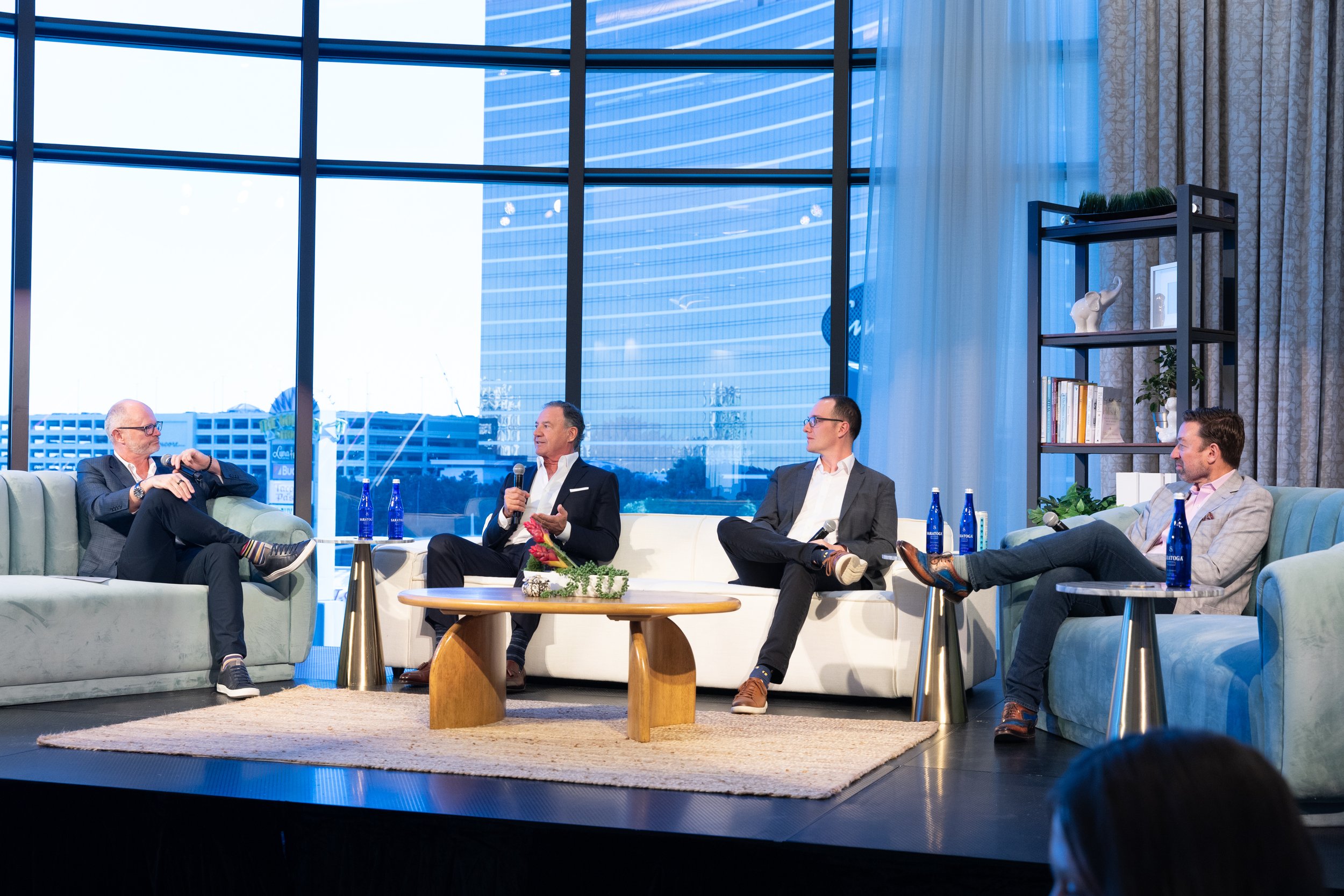
As 2025 came to a close, we reflected on several themes that resurfaced across the luxury hospitality space. These themes shaped discussions from conference rooms to deal tables throughout the year. HGA participated in these dialogues, including at the INSPIRE Luxury Hospitality Conference. HGA Founder and CEO Dave Tessier joined the panel “The Rise of Hotel Conversions, Independent Identity & Third-Party Management,”. The trends that defined the year centered on the following:
Ground-Up Development and the Residential Imperative
Dave highlighted that hospitality is a cyclical business. Historically, the industry would be in the middle of a correction by now. “We’re all waiting for the next shoe to drop,” he said, “but it hasn’t happened yet.” During and post covid, the political and economic environment was such that lenders and servicers gave borrowers unprecedented relief with payment modification and term extensions that were supposed to end when the economy recovered.
“Bank loans have been extended through COVID,” Dave explained. “Special servicers are letting loans roll over, even though many of these assets can’t refinance.”
Deals that made sense and were financed at 4–4.5% interest now face a different reality with rates 200 to 250 basis points higher. “If you had a 1.2 times cash coverage ratio back then; now it’s closer to 0.8 now and you can’t refinance with that.”
Throughout 2025, opportunities remained centered on adaptive reuse, repositioning, or new builds. But as the year closed, the ground-up development remained difficult: financing remained tight with higher interest rates, construction costs were still high, and labor access continued to be challenging. As a result, almost all new ground up construction projects incorporated a residential component.
Residential is the strongest performing segment in real estate right now. Adding a residential component, not only provides additional value but also early cash flow that offsets upfront capital requirements and supports financing.
Dave emphasized the importance of a residential component for luxury lifestyle projects. “We’re building a luxury lifestyle project… with 200 rooms and 80 condominiums. The only way we can get it done is to include condominiums.”
Why Branding Can Limit Authenticity
One of the more candid discussions was centered on the industry’s reliance on brands — the “formulas.” At scale, brands deliver clear value through global distribution, loyalty programs, and standardized operations. Brand managed hotels can also provide a deep bench of talent benefiting hotel opening or addressing property specific issues through task force resources. That structure supports financing and risk mitigation but can limit individuality and reduce upside when strong execution could otherwise differentiate the asset.
“It’s interesting,” Dave said. “We talk about creating something unique but then apply a formula to get there. You can’t standardize authenticity or experience.”
These discussions reinforced that flexibility and differentiation have become increasingly important in the luxury and lifestyle segments. Soft brands and independent platforms maintain lender confidence while allowing owners and operators the freedom to tailor design and operations to the market. Dave’s view: hotels perform best when leadership is asset-focused, decisions are locally driven, and success is defined by relevance rather than replication.
That’s where soft brands have become valuable. “Soft brands are the compromise — one of the smartest things these guys did.” They offer a practical middle ground: lender comfort without sacrificing identity. Soft brands continue to grow at an exponentially greater rate than traditional brands. What was telling to us was when Marriott shared that their second largest pipeline of branded residential was Autograph.
F&B at the Center of the Neighborhood Hotel
Food and beverage emerged as one of the most critical components of a successful luxury or lifestyle hotel. Dave emphasized that hotels are strongest when they’re designed for the local market first — creating places residents actually use and identify with.
“We build the hotel rooms for the guest, but we program F&B for the locals,” he shared. “Our hotel guests want to be part of the community.”
For today’s luxury-lifestyle traveler, the most compelling hotels are those where locals gather, the energy feels real, and the property is woven into daily neighborhood life. When executed well, F&B transforms a hotel into a community hub, driving local demand and supporting occupancy.
Dave pushed the point further: strong programming isn’t just about revenue mix — it’s about identity. “You’re not building a hotel. People aren’t coming to buy your hotel rooms; they’re coming to visit the destination.” By anchoring hotels within their neighborhoods, F&B shapes brand relevance, fuels non-room revenue, and strengthens long-term performance.
AI: Behind the Scenes, Not Between People
No conference was complete in 2025 without a discussion on AI. It came up frequently in year-end conversations as owners, vendors, and operators compared how technology is beginning to shape hotel operations and guest experiences. The consensus was clear: AI must support and enhance hospitality — not disrupt it.
At this early stage, the most effective applications remain behind the scenes, improving administrative efficiency and streamlining operations rather than replacing guest-facing interaction. As Dave put it, “Hospitality is still a people business. AI should take work off people’s plates, not put distance between staff and guests.”
Used correctly, AI can reduce back-of-house friction, freeing teams to focus on service and experience. The sentiment across conversations was consistent: technology should never interfere with the buying experience or replace the moments of human connection that define luxury hospitality.
Looking Ahead
As 2025 closes, the good news is that Ultra Luxury and Luxury continued to outpace all other segments in hospitality. Looking to 2026, conditions are expected to improve, with increased opportunities for both development and repositioning as capital markets adjust. Owners and operators who remain flexible and asset-focused will be best positioned for what comes next.
